



An Authentic Beach Wedding in Catalonia
Contact usBeach Wedding in Catalonia:
What to Expect, Coast by Coast
A beach wedding in Catalonia means something different depending on which fifty kilometres of coastline you’re standing on. The cliffs north of Barcelona have nothing in common with the flat, open sand further south, and a ceremony on Barcelona’s own urban shoreline plays out nothing like one on a private cove an hour’s drive away. Before choosing a venue, it helps to understand the actual range of what’s on offer.
What a Beach Wedding in Catalonia Actually Looks Like
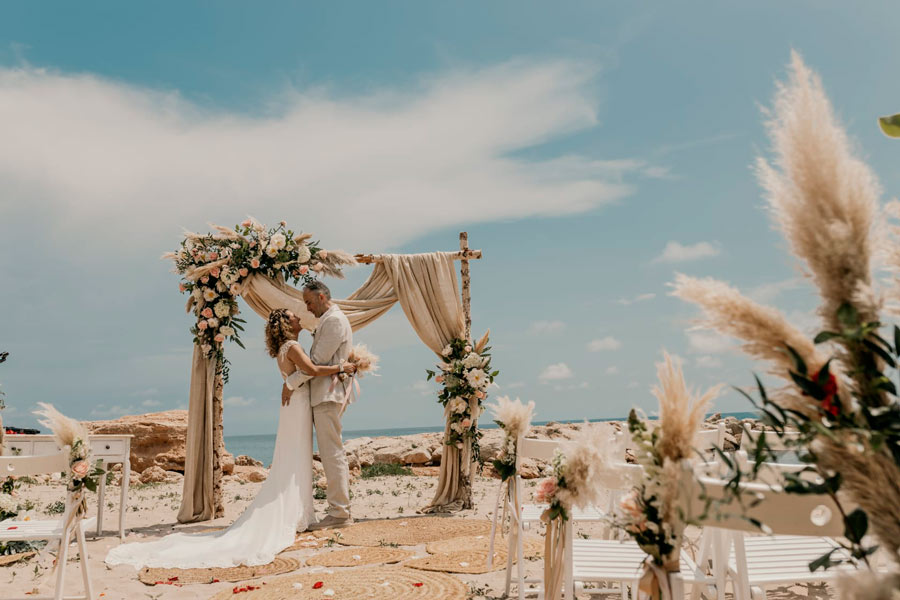
The term covers at least three distinct experiences. There’s the dramatic, cliff-backed coastline north of the city, where ceremonies are framed by rock and pine rather than open horizon. There’s the long, flat sand further south, where a private stretch can host a ceremony, dinner and party in one uninterrupted location. And there’s the option of staying close to Barcelona itself — a shorter transfer, a more urban backdrop, and a different kind of convenience for guests flying in from abroad.
None of these is the «correct» version of a beach wedding in Catalonia. They serve different priorities: drama and elevation, privacy and continuity, or ease of access. The right one depends on what matters most to you and your guests.
Costa Brava: Cliffside Drama North of Barcelona
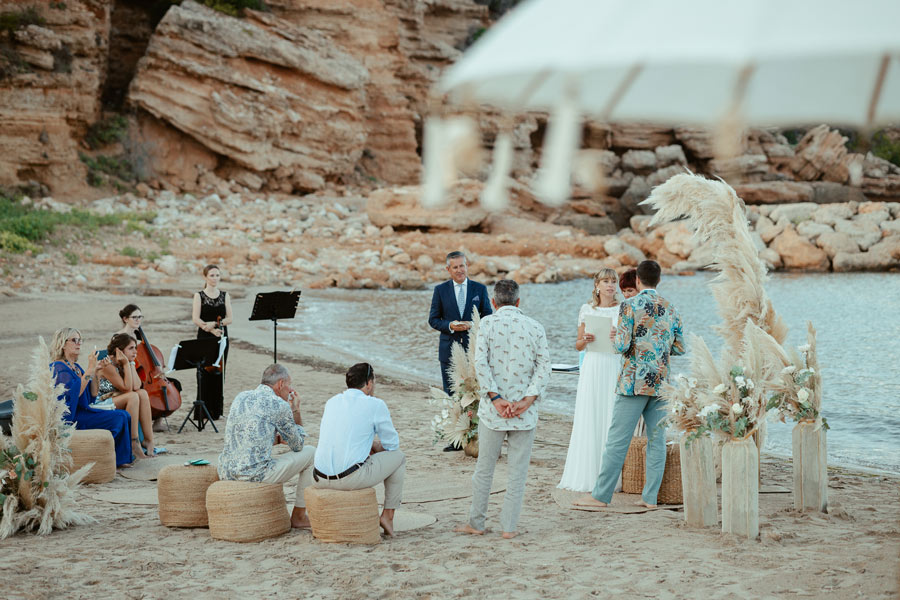
The Costa Brava is the coastline most people picture when they imagine a wedding on the Mediterranean — pine-covered cliffs dropping into turquoise coves, with ceremony spaces often perched above the water rather than directly on it. Many of its best venues combine a clifftop or terrace ceremony with a beach-adjacent reception, rather than placing the entire day on sand.
This stretch suits couples who want visual drama and a sense of elevation — literally and otherwise — and who don’t mind a slightly longer transfer from Barcelona in exchange for scenery that photographs like nowhere else in Spain.
Costa Daurada: Private Sand and an Uninterrupted Day
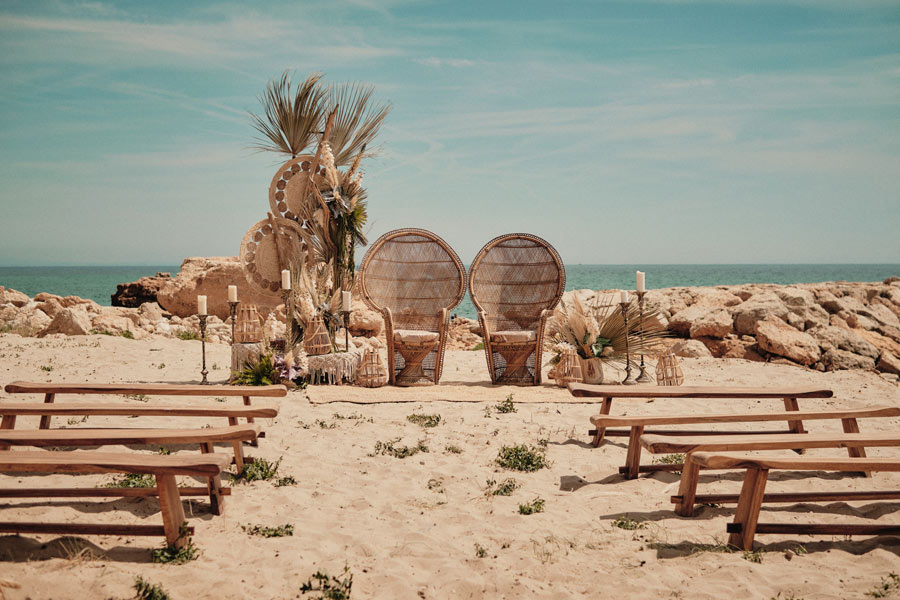
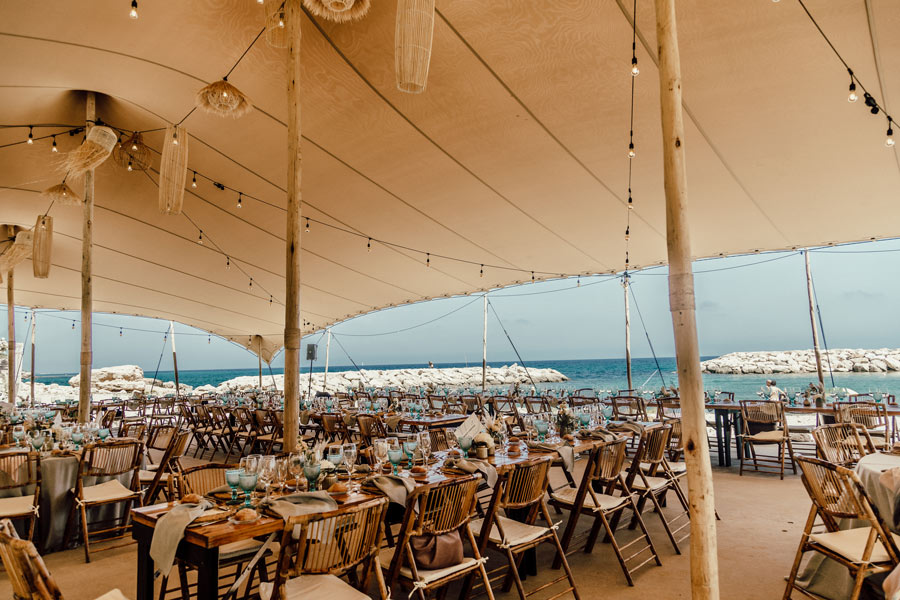
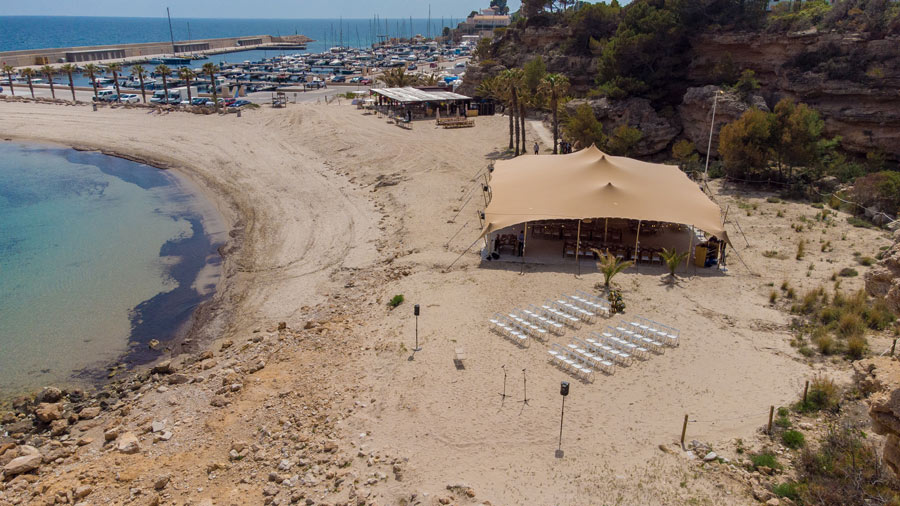
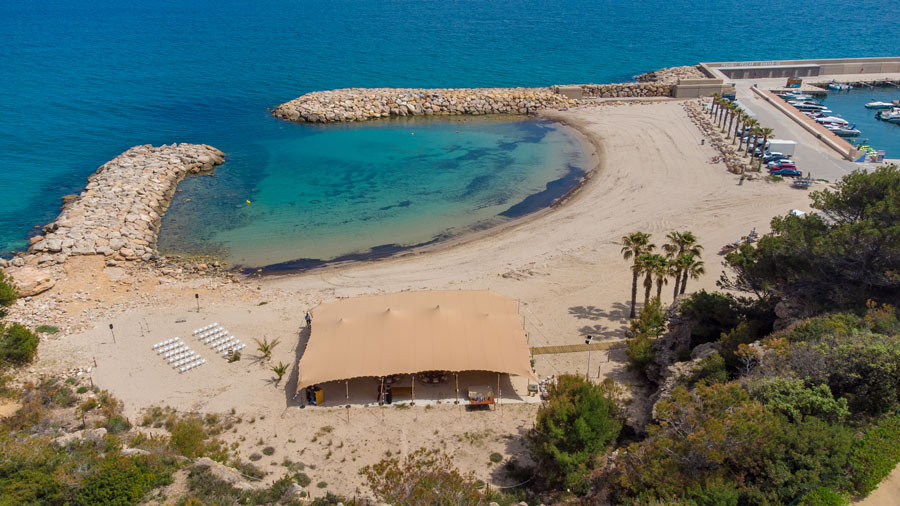
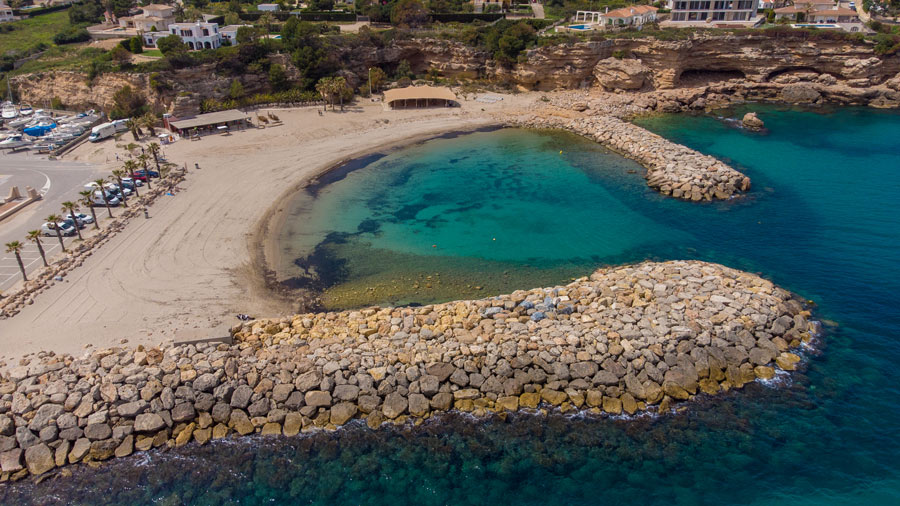
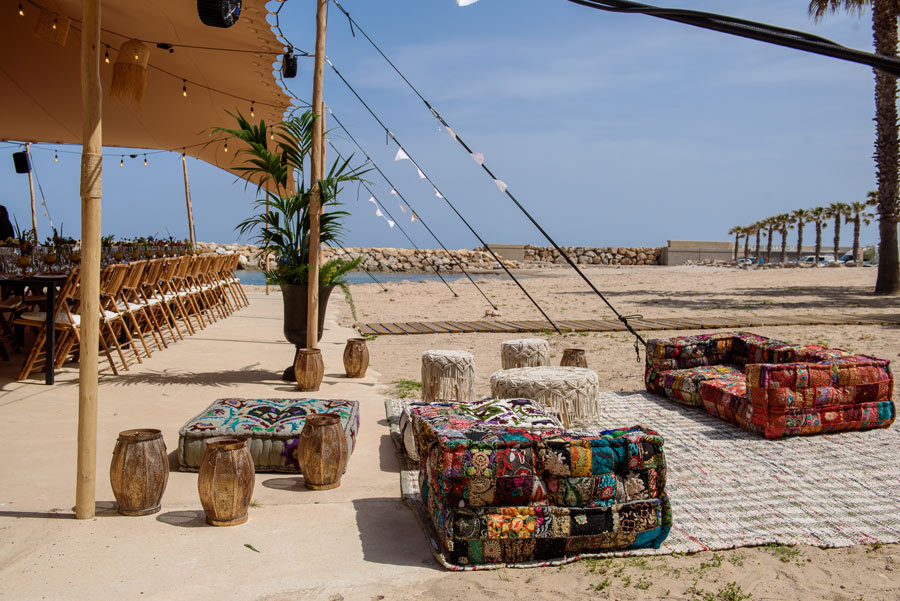
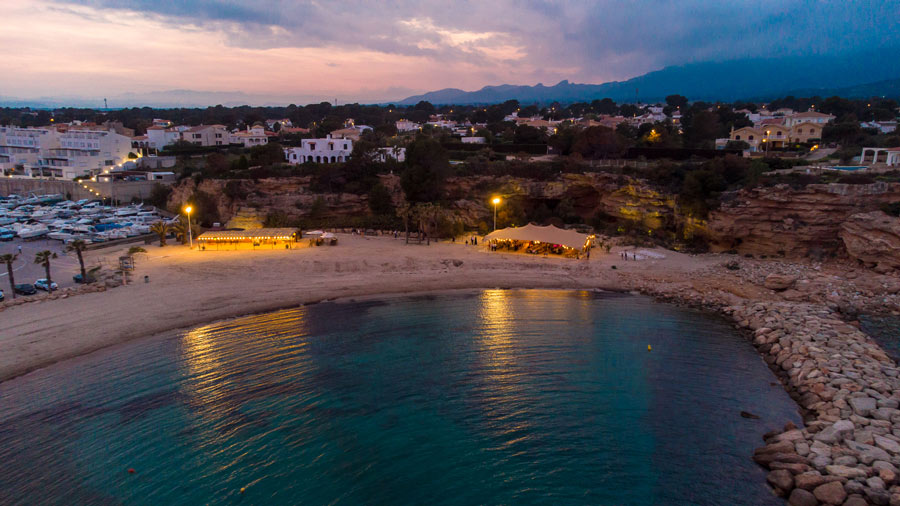
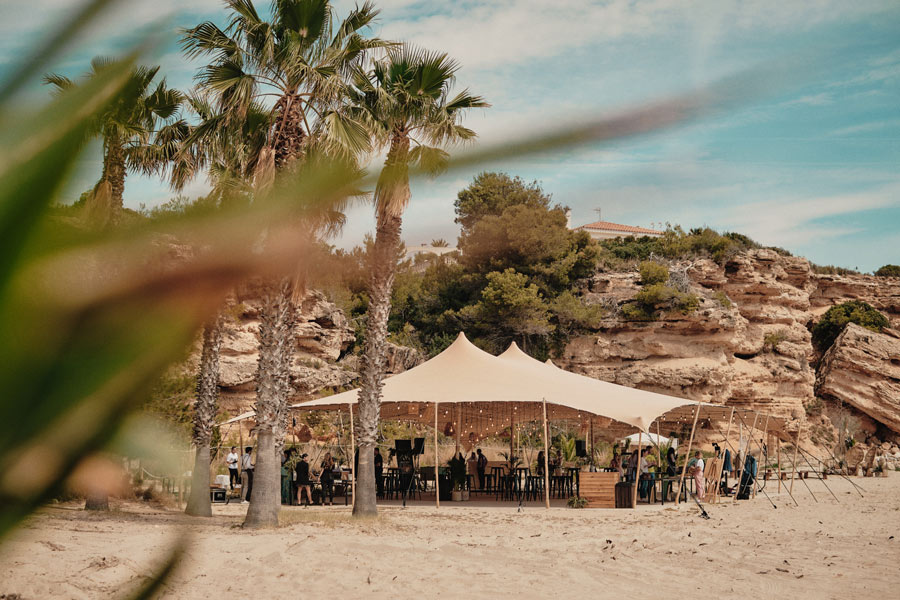
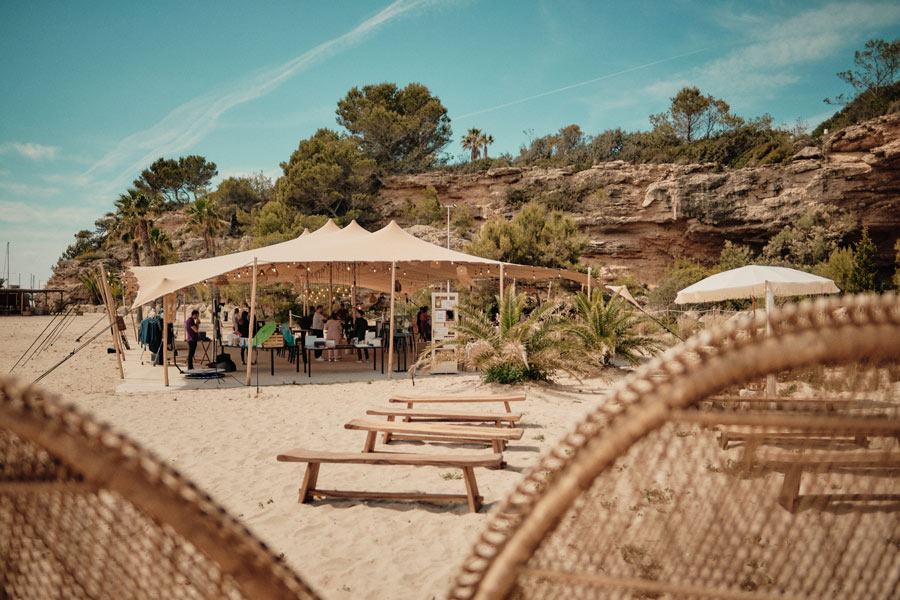
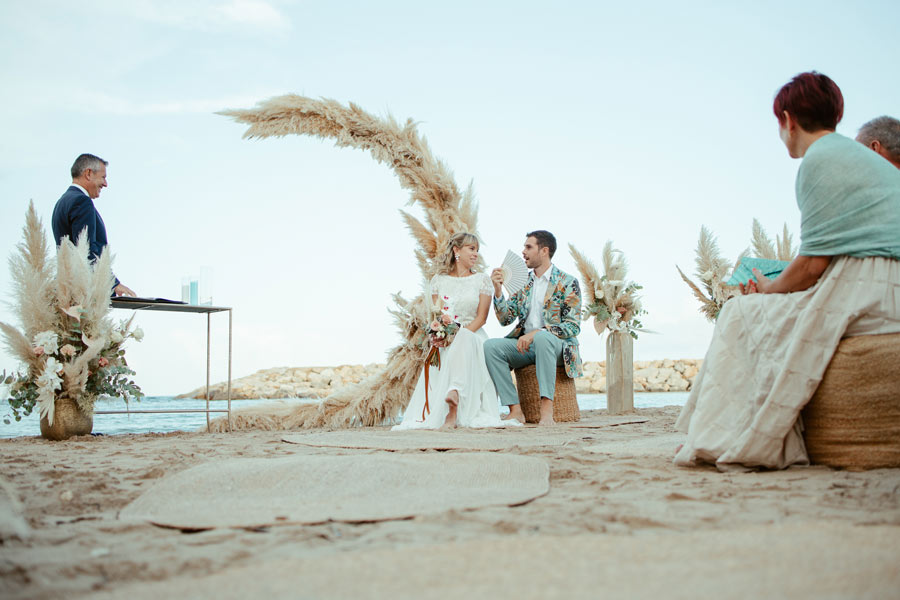
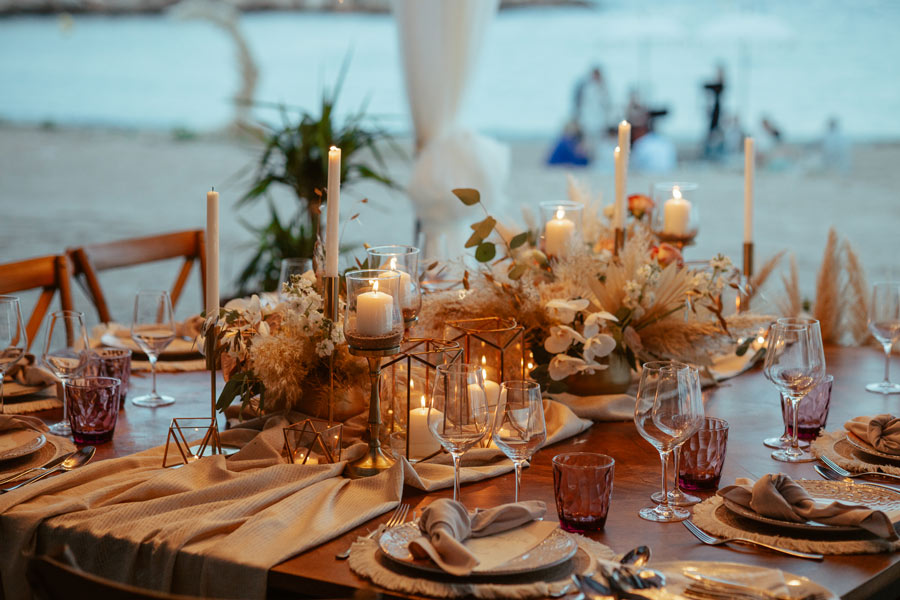
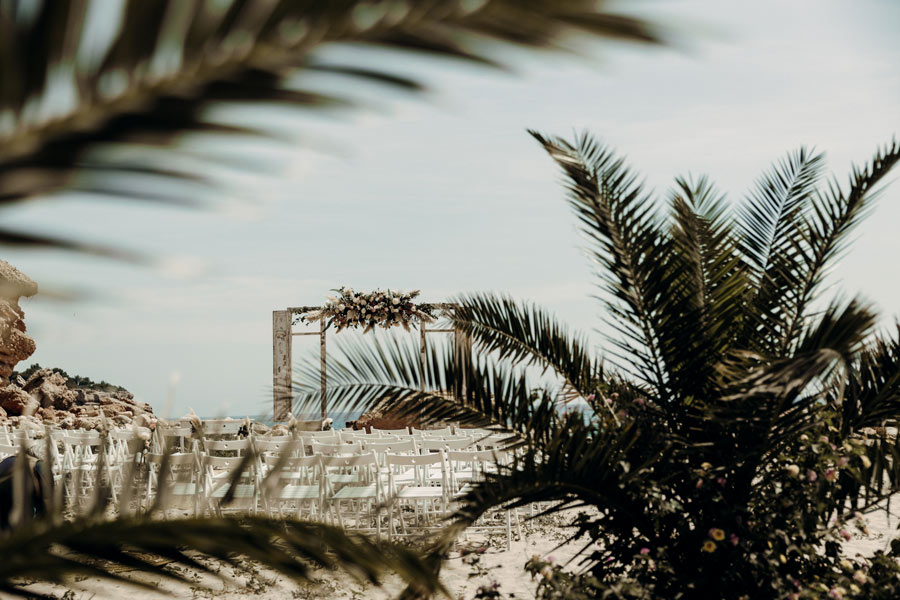
South of Barcelona, the coastline flattens into long, open beaches with a different character entirely. This is where venues like Calafat operate — a private stretch of sand roughly 90 minutes from the city where ceremony, dinner and party all happen in the same spot, without moving guests between locations.
The trade-off here is the opposite of the Costa Brava’s: less elevation and drama, more continuity and privacy. For couples who want to remove the complexity of multiple locations from their wedding day, this part of the coast tends to be the better fit.
Sitges and the Barcelona Coastline: Closer to the City
Couples prioritising convenience for international guests often look no further than Sitges or Barcelona’s own coastline. Both offer a shorter transfer from the airport, a livelier base for a wedding weekend, and beach venues that sit within easy reach of restaurants, hotels and nightlife — useful for guests who want to extend their stay into a city break either side of the wedding.
The compromise is privacy. Urban and near-urban beaches rarely offer the seclusion of Costa Brava’s coves or Costa Daurada’s private stretches, so the wedding itself is usually built around a dedicated venue or terrace rather than open public sand.
What to Expect Logistically
Every beach wedding in Catalonia shares a few practical realities, regardless of which coast you choose. Ceremony timing is dictated by light and tide, not convenience — a 6pm start in June behaves completely differently to a 6pm start in September. Sound permits for outdoor ceremonies and receptions vary by municipality and need to be secured well in advance, particularly on public or semi-public stretches of Mediterranean coastline. And weather contingency has to be agreed before the day, not improvised on it — an open beach offers no walls to retreat behind if conditions change.
These are the details that rarely make it into a venue’s photographs, and they’re exactly why full-service planning matters more on the coast than almost anywhere else in Spain.
Choosing the Right Stretch of Coast for a Beach Wedding in Catalonia
A useful way to decide is to rank what matters most: scenery and elevation (Costa Brava), privacy and an uninterrupted day (Costa Daurada), or proximity and convenience for guests (Sitges, Barcelona). Few venues offer all three at once, and trying to force one coastline to deliver another’s strengths usually shows up as compromise on the day itself.
It’s also worth considering your guest list. A wedding built around international travellers with limited time often favours proximity. A wedding where the setting itself is meant to be the centrepiece — the thing guests remember and talk about afterwards — tends to favour the drama of the Costa Brava or the privacy of the Costa Daurada.
Planning a Beach Wedding in Catalonia With Full-Service Support
Catalonia’s coastline rewards couples who plan with someone who already knows the difference between these regions — not just aesthetically, but logistically: which stretches require which permits, which venues can actually host a full day without a transfer, and which ones only look that way in photographs. We plan experiential luxury weddings across Spain, and matching the right coastline to the right couple is where that planning starts.
If you’re still deciding which part of this coast fits your wedding, we’d like to walk you through the options in more detail.
FAQs
What’s the best part of Catalonia for a beach wedding?
It depends on your priorities. The Costa Brava offers cliffside drama, the Costa Daurada offers private sand and an uninterrupted day, and Sitges or Barcelona offer easier access for international guests.
Do I need a permit for a beach ceremony in Catalonia?
Most outdoor ceremonies and receptions on or near public beaches require local permits, particularly for sound and structures like tents. Requirements vary by municipality, which is why this is usually handled as part of full-service planning.
Is Barcelona itself a good location for a beach wedding?
Barcelona’s own coastline works well for couples prioritising convenience and a livelier wedding weekend, though it offers less privacy than venues further from the city.
What’s the difference between Costa Brava and Costa Daurada for weddings?
Costa Brava is defined by cliffs and coves with elevated ceremony spaces; Costa Daurada offers long, flat private beaches where the entire day can take place in one location.
What time of year is best for a beach wedding in Catalonia?
Late spring through early autumn offers the most reliable weather. June and September tend to be preferred for warm evenings without peak summer heat.
Can guests get to a Catalonia beach wedding without a car?
It depends on the venue. Locations close to Barcelona or Sitges are easily reached by taxi or transfer; venues further down the coast, such as those on the Costa Daurada, usually require organised guest transport — another reason this is planned, not left to guests to figure out.
Catalonia’s coastline isn’t one beach wedding — it’s at least three. Tell us what matters most to you, and we’ll help you find the right stretch of it.




Tell me more

